
La Libre Belgique · 2004
Media passions
Translated from the French. Original: La Libre Belgique, February 27, 2004 · French version

united states
Media Passions
DAVID BENAYM
Published and posted online on 27/02/2004
Mel Gibson’s new film has just been released on American screens... The mood in New York around this For the Democratic veteran, the last brother of the Kennedy dynasty, John Kerry is “the president America needs”.
As for the Bush administration, it has made “America weaker”, he says.
THE MOOD
SPECIAL CORRESPONDENCE FROM NEW YORK
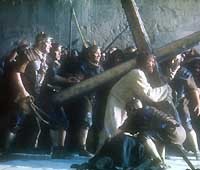
Ash Wednesday, eleven in the morning at Union Square, a popular neighbourhood in the heart of Manhattan. Nearly one New Yorker in four is walking around with a small cross smudged hastily on the forehead in the local church. The day is symbolic, even if the media carnival around “The Passion of the Christ” is still raging. At the cinema entrance, however, the mood is relaxed: people are nibbling popcorn. But, for the first time in a long while, bags are searched at the turnstile, for fear that some extremists might disrupt the first screening of the film that all of America, and after it the whole world, is talking about: The Passion of the Christ. Never has a film been so talked about before the press had even been able to see it. Here everyone has an opinion, without knowing the exact content of the work. The professionals hail the “coup”: “With no budget, Gibson got a tremendous promotional campaign,” admires Jerry, an advertising man met in the queue. Between rumours of exacerbated antisemitism and the clearly revisionist remarks of Gibson senior, all the ingredients were there to make this non-event a hot topic.
A “GORE” FILM?
The film starts head-on, with no opening credits. The audience is immediately stirred. And relieved, too: “Finally, I’ll be able to form an opinion on this media passion,” breathes Keith, who slipped out of his office to see the incendiary film: the last twelve hours of “Yeshua of Nazareth”, in Aramaic and Latin! For more than two hours, from the arrest to the crucifixion, images of blood, hatred and humiliation parade before the dazed eyes of the spectators. Between tears and stupor, astonishment and dread, the film oozes haemoglobin throughout the screening. Some leave the theatre, others cover their eyes before the atrocity of the spectacle, most remain speechless and watch the controversial film with as much detachment as possible. It is above all out of curiosity that the crowds turned out from the first day of screening. Cynthia, a practising Catholic, says she is “shocked by the flatness of the message. This film offers nothing but two hours of torture, it’s pure gore!” she laments. A film student at the prestigious New York University, Craig admits he was “lost”
in the middle of the story: with no particular religious heritage, he struggles to follow the thread of this succession of “sadistic scenes”: “In the end, the film is rather tedious…” Mel Gibson’s approach is not in itself ill-intentioned, but it makes the film “difficult”: dialogue in dead languages and inspiration from Gospels that few people know. It is aimed at an informed audience. Yet his film is offered to the general public, which does not always have the
background to understand that the message is not primarily antisemitic but above all a very personal interpretation. And nothing in the work guides, explains or puts things into perspective. It is a shock in its purest form.
A LOT OF BLOOD, BUT LITTLE MEANING…
On the front page of every newspaper, on every television programme, the media seized on the film’s release, bringing the debate to white heat. Such publicity is out of all proportion to the very average quality of the film. The Hollywood studios’ refusal to produce the film, the director’s constant secrecy around the script, the 25 million dollars risked out of his own pocket, the unconditional support of made-in-USA fundamentalists, the Holocaust-denying diatribes of Gibson senior: so many peripheral ingredients that ended up making it an event. For the Washington Post, it is a feature film that is
“almost pornographic” in its violence. For the Chicago Sun-Times,
“it is the only film that tells what really happened”. For the
Los Angeles Times, “its sadistic intensity wipes out everything else…” And so America, between insults and professions of faith, between heart attacks (two, to date) and a few fights in theatres, wakes up asking itself, two thousand years later, this absurd question: “Who killed Jesus?” The Jews, the film seems to say. “All of us!” replies Mel Gibson, defending himself on ABC against any hatred for “his Jewish brothers”. As for the viewer, this film will not leave him indifferent, but no more enlightened in the end. A lot of blood but little meaning… And if by chance, near Union Square, he comes across, as we did, that discreet old priest, he may finally hear the voice of wisdom: “Who killed Jesus? But it was He who decided to give his life. He, the Jew, surrounded by Jewish apostles, tortured and crucified by Romans. And he did it hoping to reconcile us…” From that point of view, unquestionably, Gibson’s film seems a complete failure.
© La Libre Belgique 2004