
Op-ed · 2018
Broadway’s Chutzpah
Translated from the French. Original: op-ed by David Benaym, June 2018 · French version
 Op-ed
Op-edWhen a notion is untranslatable, you might as well keep the original word. That is what Americans did with chutzpah. While Hebrew translates it rather as insolence, this Yiddish word is defined in American dictionaries as the very essence of audacity, for better or for worse. The audacity of the young people born of Polish Jewish immigration to Manhattan at the end of the 19th century, freshly arrived from the pogroms of Eastern Europe. Like an unlikely legacy, chutzpah remains in the vocabulary as a notion more positive than negative: the brazen, the cheeky, the one who dares against all odds. But beyond words, it is in the art of the musical, which exploded in Times Square throughout the 20th century, that this audacity took on its full meaning, through composers and lyricists who came from the Yiddish theatre downtown, on the Lower East Side.
Among the best-known creators are the brothers Ira and George Gershwin, who composed Summertime and Rhapsody in Blue. Remember the very beginning of that piece, which opens with a klezmer clarinet before moving into jazzier themes. That too is the integration of the Yiddish tradition into the magical world of Broadway.
These young artists were true pioneers. They were the first to put Black actors on stage to play their own roles: no more white performers’ faces blacked up with shoe polish. Rodgers and Hammerstein told the most beautiful stories, which anchored the American dream in people’s minds, with Oklahoma! or The King and I.
But surprisingly, at the time, the themes tackled by these storytellers were not at all predominantly Jewish. They sought the widest possible audience. It is a little as if they had gone into the closet, and for many not only about their Jewishness.
But the subjects they addressed were often about difference, the desire to express oneself in a society that does not understand you, class struggle. Everyone can hum “I like to be in America” to music by Leonard Bernstein; Stephen Sondheim, another author from Yiddishland, tells in West Side Story the complexity of the American dream. And all the minorities of yesterday and today can still find themselves in it.
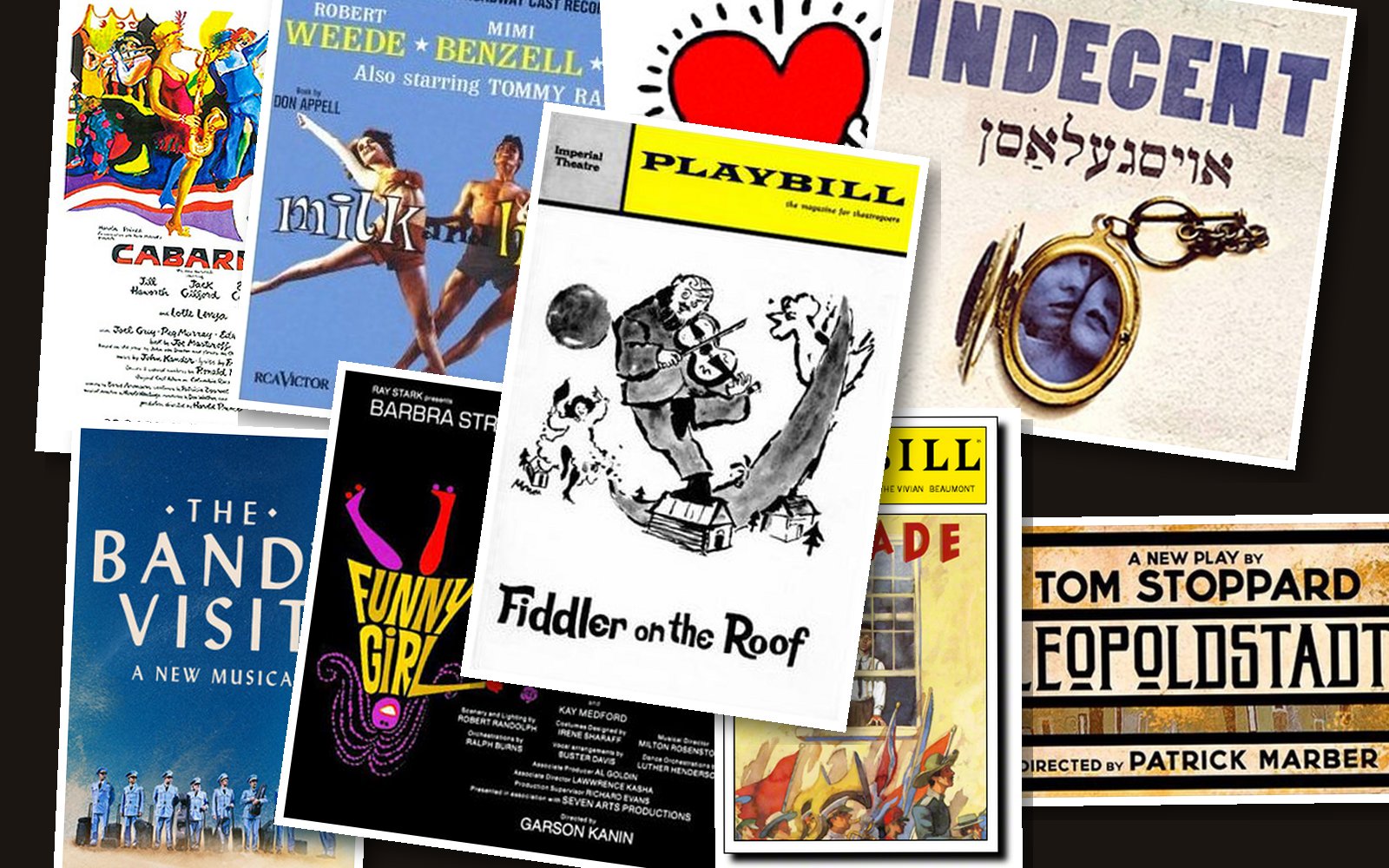
Other standards that still cause a sensation every night on Broadway are the works of Fred Ebb, with Chicago, which gave power to women, or Cabaret, which tackles the Second World War through a small Berlin theatre where all the eccentrics and outcasts gather to mock and denounce Nazism. That too is Broadway: an entertaining but acerbic critique of society, often in fictions steeped in reality.
Such is the case of the legendary Fiddler on the Roof, which tells precisely the story of the grandparents of these young New York Jews. The pogroms in Russia, antisemitism, and the difficulties faced by a father with three of his daughters, each of whom chose to marry going further against tradition, even outside their religion, up to the inevitable exodus to the New World to escape oppression.
This generation, which dared to bring forbidden or taboo subjects to centre stage, forged the chutzpah still found in American culture, in humour, through film and TV series. So much so that Conan O’Brien, the host of a late-night satirical show, prefers to warn, not without audacity, that on the evening of Yom Kippur he will not get a single smile out of his viewers, since all his Jewish writers have taken the day off to fast…
David Benaym